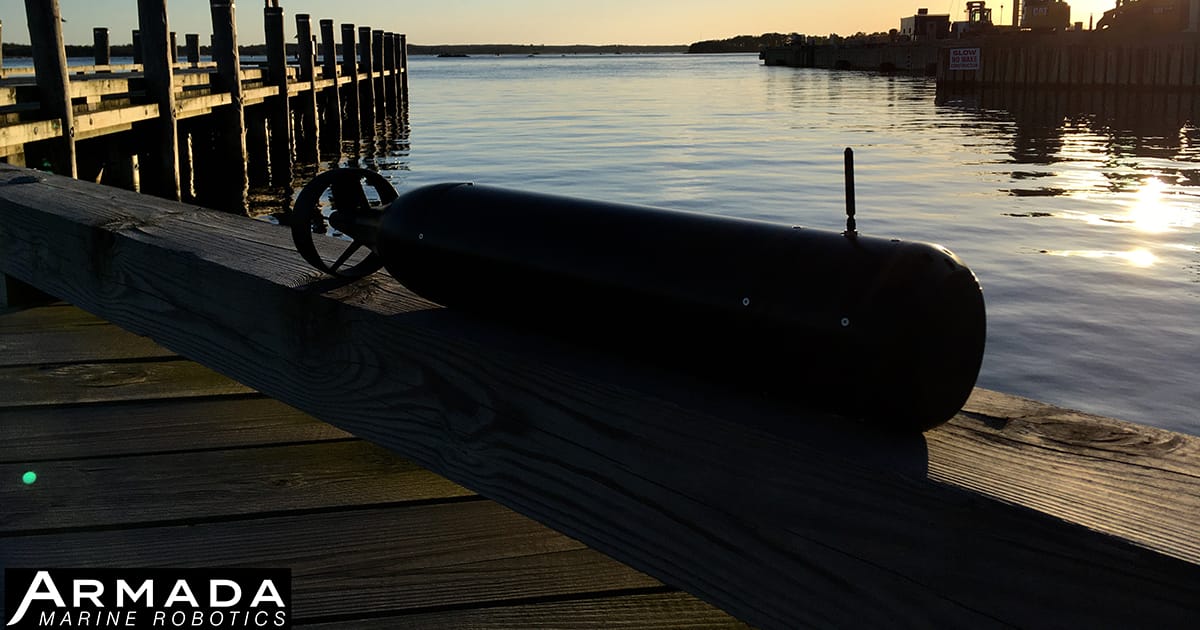
The Woods Hole Oceanographic Institution (WHOI) is announcing the execution of two exclusive license agreements with ARMADA Marine Robotics, a WHOI spin-off company co-founded by WHOI engineers Robin Littlefield and Jeff Kaeli.
These agreements mark a significant milestone in WHOI’s efforts to foster innovation, entrepreneurship, and the commercialization of transformative ocean technologies.
ARMADA is the first WHOI spin-off to utilize the new WHOI Express License, which provides streamlined benefits specifically for WHOI founders. The agreements grant ARMADA exclusive rights to two patented WHOI technologies, Asymmetric Propulsion (US Patent No. 9,873,499) and Rotational Feedback Control (US Patent No. 11,990,857), for use in underwater and marine surface vehicles. Additional inventors include Frederic Jaffre, Senior Electrical Engineer at WHOI, and Emeritus Oceanographic Engineers Tom Austin, Mike Purcell, and Ben Allen.
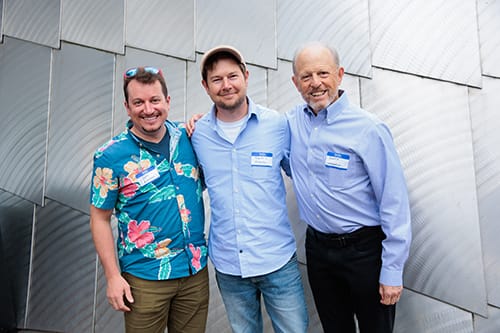
ARMADA Marine Robotics team. (Image credit: Woods Hole Oceanographic Institution)
“This new technology is a leap forward for ocean exploration,” said Robin Littlefield, Co-Founder of ARMADA, and a Senior Engineer in Applied Ocean Physics & Engineering (AOP&E) at WHOI. “ARMADA is advancing marine propulsion technology to create a new generation of underwater robots. Asymmetric Propulsion and Rotational Feedback Control allow for maneuverability, efficiency, and reliability, for underwater vehicles. These new technologies will increase access to parts of the ocean that have remained unexplored or are otherwise challenging to access.”
Jeff Kaeli, Co-Founder and CEO of ARMADA, added, “Asymmetric Propulsion allows underwater vehicles to propel and control themselves with the least amount of hardware possible. This radical simplification of underwater vehicle movement reduces costs and complexity, enabling scalable ocean sensing at sea. The technology unlocks new possibilities for defense, research, and commercial applications.”
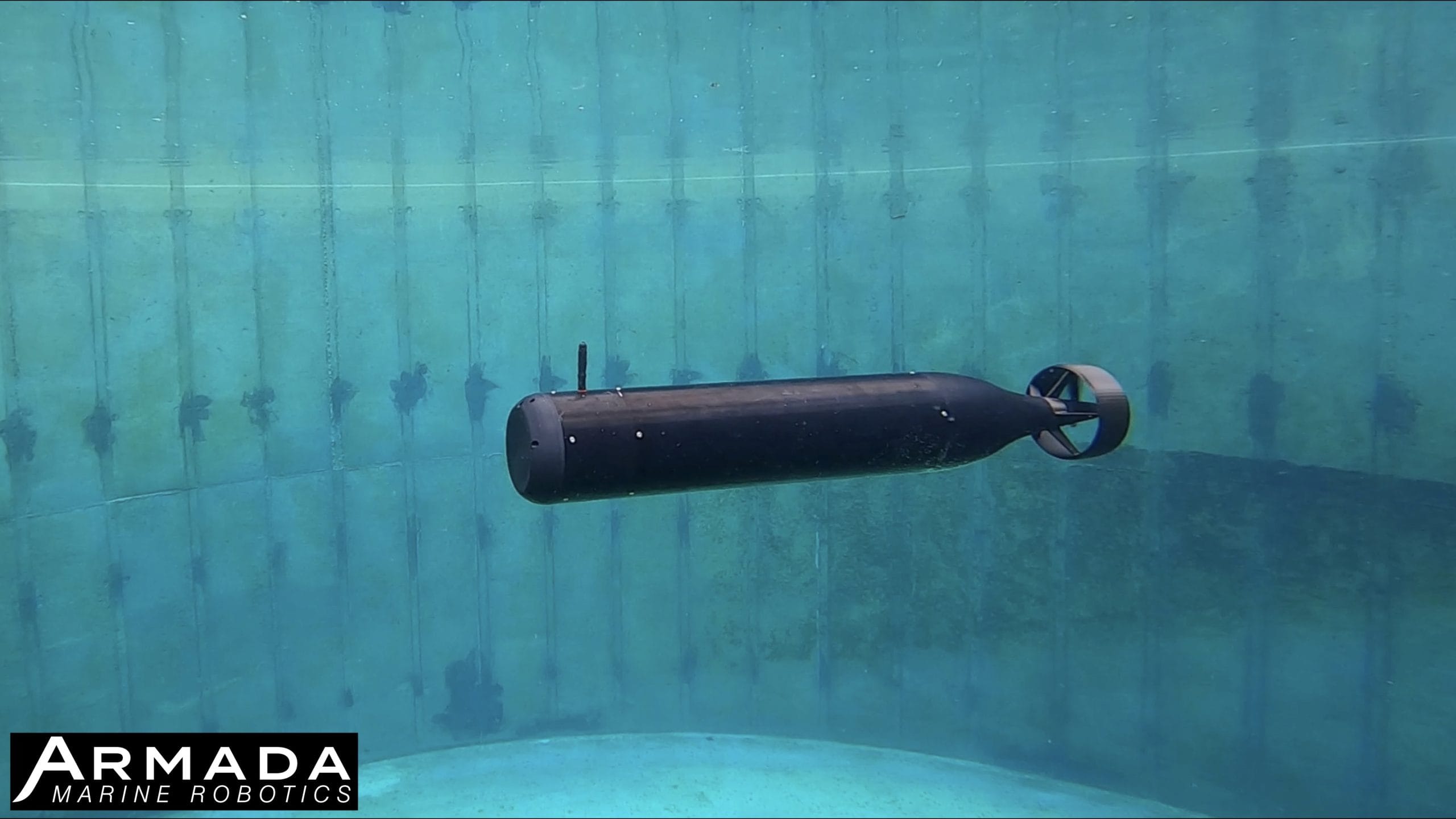
Asymmetric Propulsion. (Image credit: Woods Hole Oceanographic Institution)
Asymmetric Propulsion works by varying the speed of a single-bladed propeller over the course of each rotation. This enables both thrust and steering from a single motor, improving low-speed maneuverability while eliminating the need for fins and additional motors for control. The propulsion solution ARMADA is bringing to market leverages these benefits to reduce the size, weight, drag, and complexity of propulsion systems. Rotational Feedback Control further improves vehicle stability and maneuvering capabilities, ensuring optimal functionality in challenging underwater environments.
“By driving down the cost and complexity of underwater platforms, we can fill critical data gaps in ocean monitoring, providing the climate markets with essential data on temperature, salinity, nutrients, biology, and heat content,” said Littlefield. “Sensing at scale will allow us to better understand the carbon cycle, extreme weather events, and earth systems at large. These rich datasets will be pivotal for tackling oceanic and planetary climate challenges.”
Reflecting on his journey with ARMADA, Kaeli shared, “Being part of ARMADA has been an incredible experience—a decade-long evolution from a sketch on a napkin to launching a thriving company. As WHOI continues to support spin-out ventures like ARMADA, the institution is poised to make even greater contributions to the blue economy.”